
That's your dog.
That's what you felt.
Every health topic begins with a sensation you already recognize — then gives you the genetics behind it.
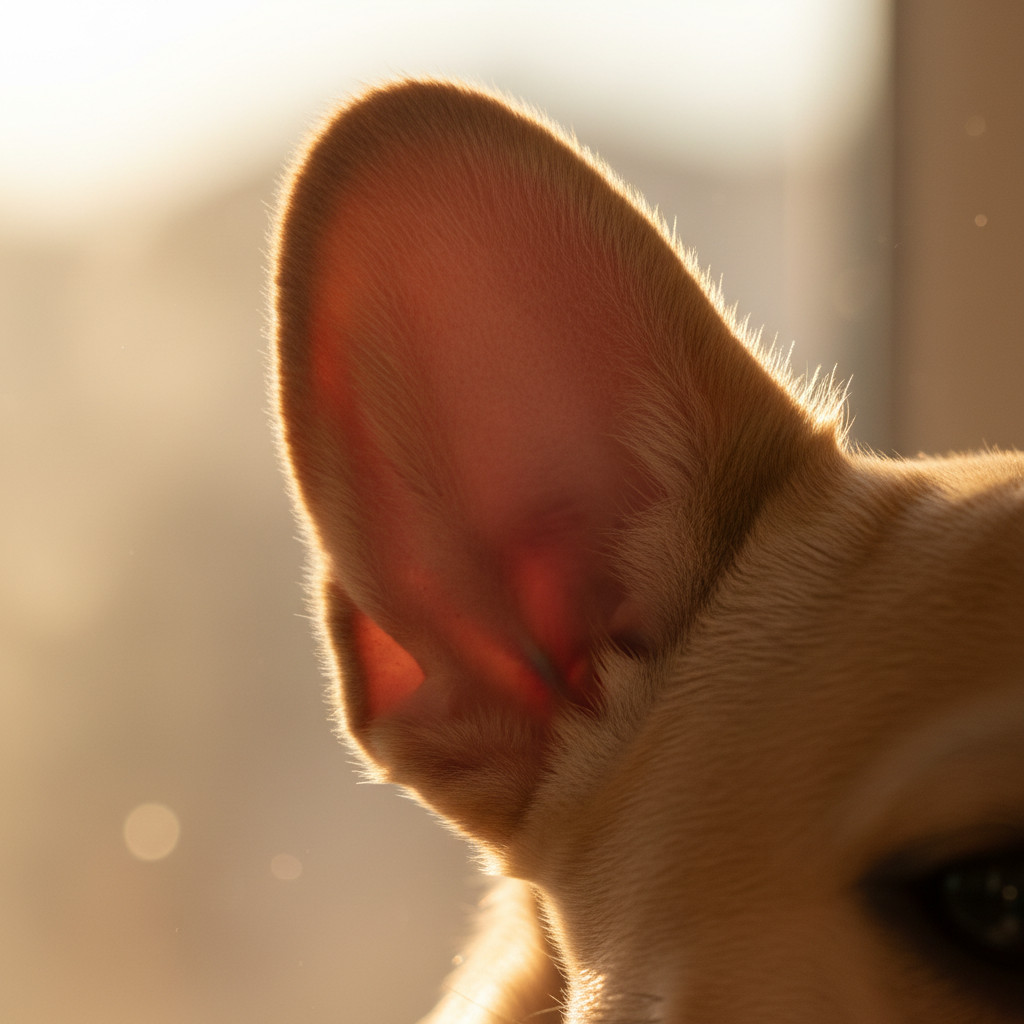
You noticed it on a hot walk.
That labored wheeze that made you stop and crouch down.
Recognize this: The sound of labored breathing on a hot walk.
BOAS (Brachycephalic Obstructive Airway Syndrome) affects up to 58% of French Bulldogs. It's not just snoring — it's a structural condition with a genetic component that ranges from mild to life-altering. Understanding the grade of your dog's BOAS changes every decision: exercise limits, anesthesia risk, and whether surgical intervention makes sense.
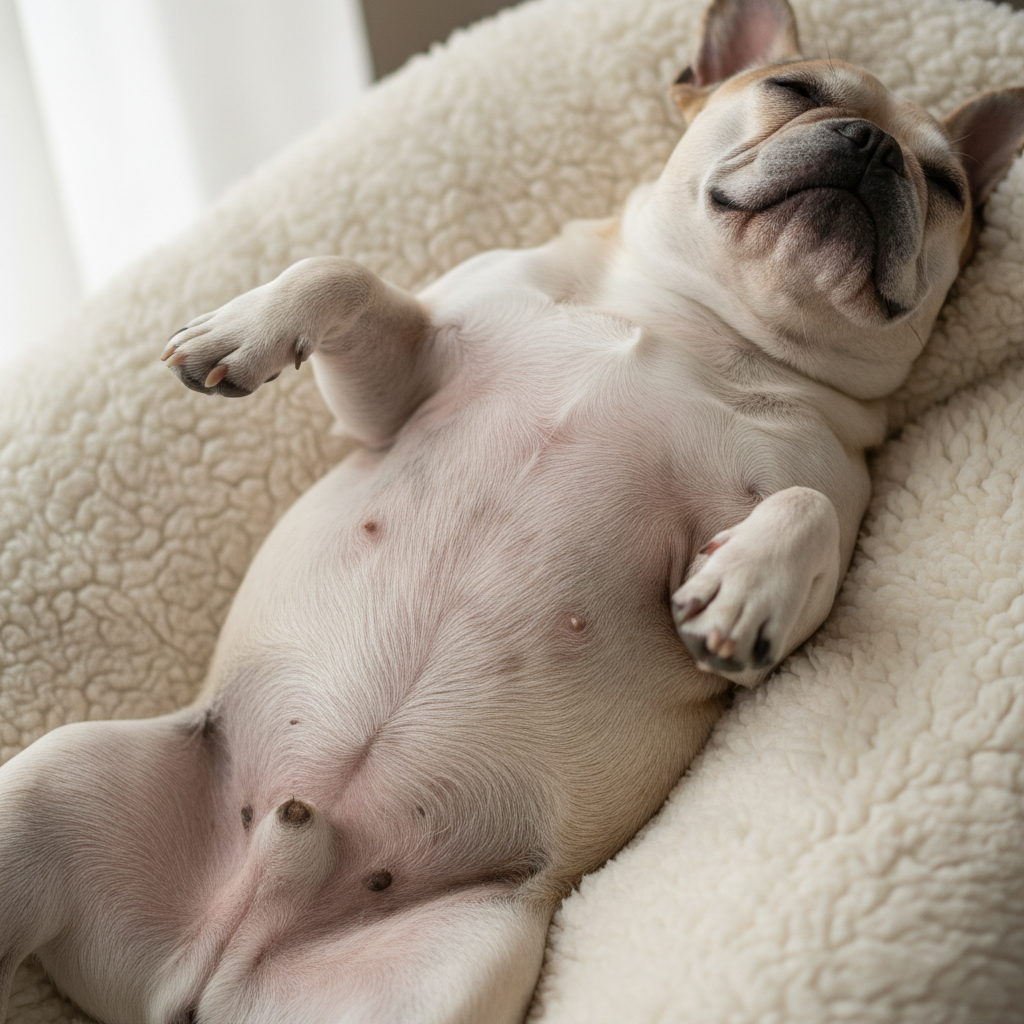
You felt it during a belly rub.
A small lump under the jaw. A flinch you almost missed.
Recognize this: The feel of a lump under the jaw during a belly rub.
Hemivertebrae — wedge-shaped vertebrae caused by a genetic mutation — are so common in French Bulldogs that some vets consider them "normal." They're not. Understanding which hemi formations are stable versus progressive helps you know what to watch for, when to scan, and how to protect your dog's quality of life before symptoms appear.
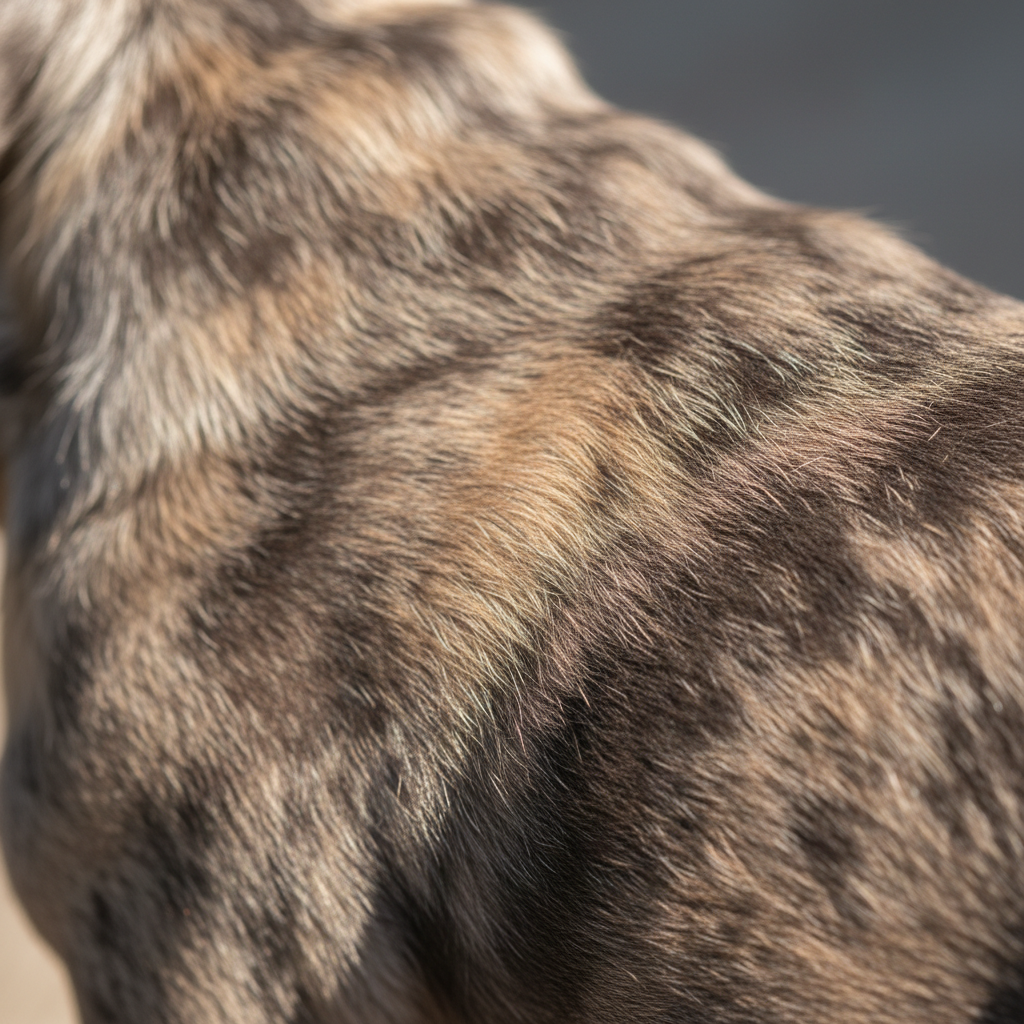
You saw it in the light.
That marbled swirl of merle coat. The wet shine of a healthy nose.
Recognize this: The marbled swirl of a merle coat under natural light.
Color in French Bulldogs isn't cosmetic — it's a direct window into genetic health. The merle gene (M locus) linked to deafness and eye defects. Dilute (dd) connected to Color Dilution Alopecia. Isabella and chocolate tied to skin sensitivity. Every color carries a story, and knowing how to read it protects your dog and informs breeding decisions.
The inheritance maps
your vet doesn't have time for.
Visual guides to color genetics, health screening timelines, and breeding risk — built for owners, not lab technicians.
How Frenchie Colors Are Inherited
Most color traits follow simple Mendelian inheritance — but several interact in ways that create health risks. Understanding dominant vs. recessive expression helps you predict outcomes and avoid dangerous double-merle pairings.
Merle × Solid Cross
Merle × Merle = 25% Deaf
Double merle pairings carry a 25% chance of homozygous puppies with severe eye and hearing defects.
dd genotype
Blue and lilac Frenchies carry double dilute (dd) — linked to progressive hair loss and chronic skin infections.
When to Screen Your Frenchie
Know Before You Breed
Cross-reference parent genotypes to predict health risks in offspring. Understanding which combinations amplify BOAS severity, spinal instability, or color-linked conditions protects the litter.
From midnight panic
to informed advocate.
Real Frenchie owners, breeders, and rescue volunteers who found the answers they needed.
"I found a lump during a belly rub and panicked. The spinal genetics article explained exactly what hemivertebrae looks like and what questions to ask the vet. We got an MRI two weeks later. Early catch, no surgery needed."

"I was breeding my blue female and didn't understand the dilute gene interaction. The genetics consult literally changed my entire pairing plan. Saved me from a litter with serious coat and skin issues."

"Surrendered to us at 14 months with BOAS Grade 2 in his records. I had no idea what that meant. The BOAS article helped me understand his limits, his triggers, and when to push for the palate surgery conversation."

Video call or written report · 48hr turnaround
Three questions.
Then we talk about your dog.
Tell us about your Frenchie and what's on your mind. We'll match you with the right consult format.
Not ready to book? Download the free Health Checklist instead →
The Frenchie Health Checklist
The exact screening schedule, warning signs, and vet-conversation starters that Frenchie owners wish they'd had from day one.